The Art of the Out-Breath
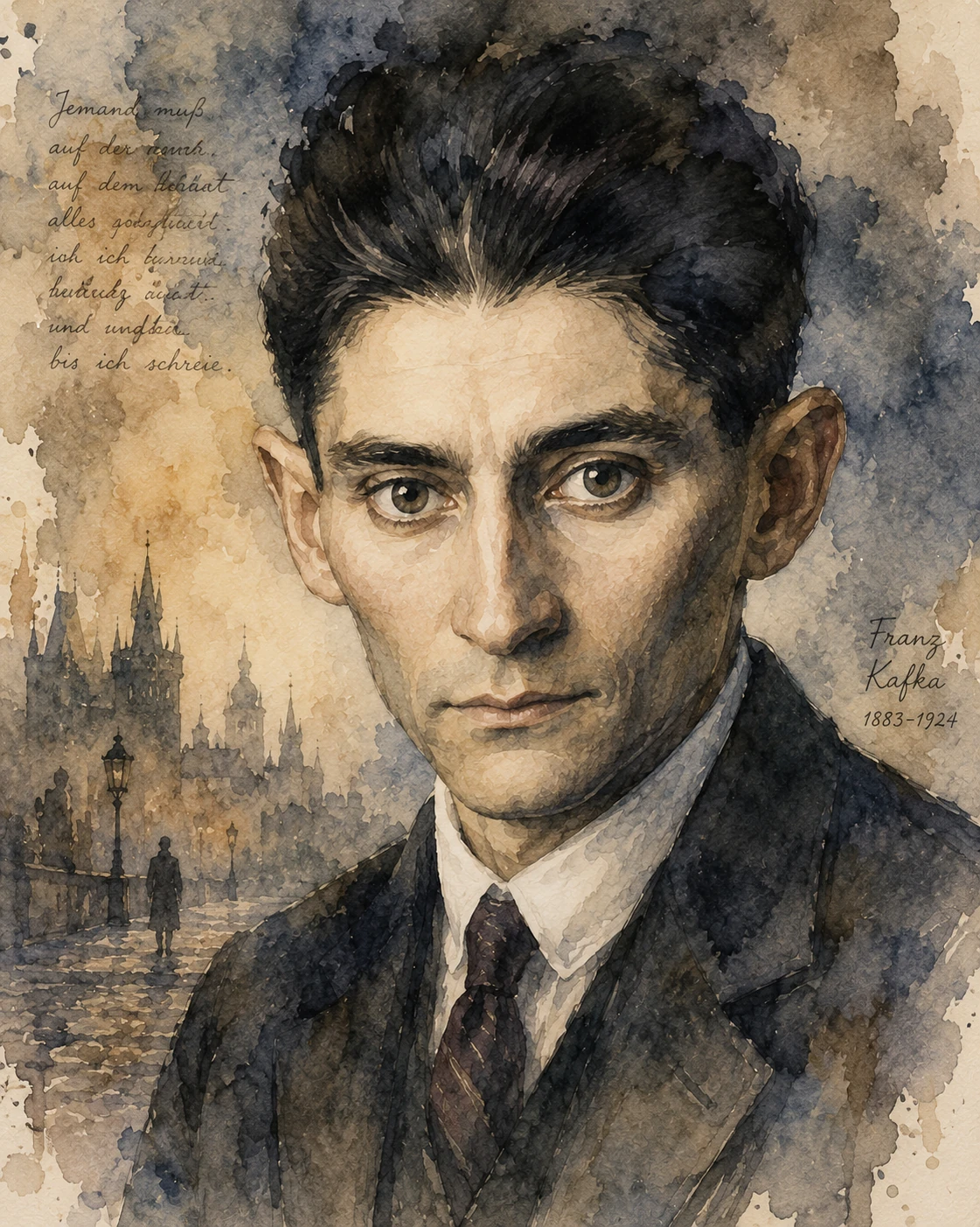
Franz Kafka and Psychological Integration
I write differently from what I speak, I speak differently from what I think, I think differently from the way I ought to think, and so it all proceeds into deepest darkness.” —Franz Kafka
Is this a disconnect? Not at all. I’m not interested in experiencing a thought, speaking the content of the thought, and then acting on the thought. On the cushion, it’s fascinating to watch thoughts come and go, notice the judgement of what makes a thought a good thought or a good idea to act upon. This freedom describes my “becoming.” And as the Buddha stated, “We are always becoming.”
Learning that kind of discernment takes time, shaped by the conditioning we bring to the cushion. I remember avoiding self-compassion practice, until one day when something changed. I practiced it and saw how it gave me the buoyancy to stop beating myself up when I felt like I’d failed in some ways. To notice thought, refine speech, and act on it—like Kafka did by committing it to the page—is to cultivate for ourselves healing, integration, and in our own time, a changed path. Viewed this way, Kafka sounds less fragmented and tortured and more like an advanced meditator.
Each of us has his own way of emerging from the underworld, mine is by writing. That’s why the only way I can keep going, if at all, is by writing, not through rest and sleep.
Kafka kept a tight loop between his writing and need for darkness and aloneness. He opted for multiple sexual liaisons over marriage. Although he was keen to leave the world behind, its chaotic, ill-formed state still made its way into his writing. He balanced the extremes held in the cage of his mind—alienation, lostness, lack of authority—through his masterful command of language and writing. It was his middle way.
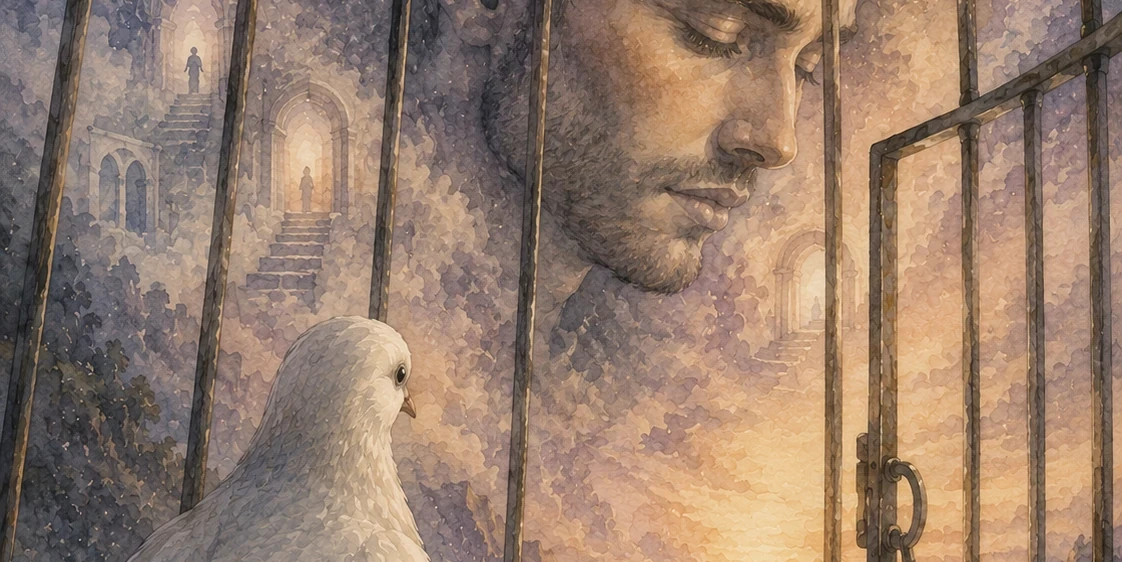
Forgoing rest and entering death in order to write gave him strength to re-enter the dark. It’s as if his life was a constant in-breath of observation, so precise and well-crafted that perhaps it could be said that he became intensely aware of the bars of the personal jail cell that was his mind. Like a child who was not fully seen, he sensed the amorphous shapes tugging on his mind and fought back, exposing them to full light. Harnessing them properly required an out-breath, which only his writing could provide.
I am a cage in search of a bird.
Kafka was beyond hope. It was as if he sensed that in time, a part of his psyche would birth itself. But while he waited, he struggled. Instead of waiting for that metaphorical bird to arrive, he conjured its existence through a letter to his father. It was the ultimate, anguished attempt to resolve the estrangement and hostility between them. His father, the ultimate authority figure, would have been the perfect conduit for Kafka to resolve his active complex. But Kafka’s mother refused to deliver the letter, refusing Kafka the agency to resolve his sense of authority over his life.
Kafka could flawlessly describe his cage. Although he did succeed in changing his life, he would not live long enough to completely step outside the thing he described so well. Kafka is romanticized. His soul’s progress happens in the darkness, the darkness of bed pleasures and during the moments when it would be a time of sleep. Parallel to the teachings of the Buddha, Kafka said that it’s more than being a hermit, more than that reclusive pull away from society. Kafka found his life path and its sense of adventure in his pull to darkness. He found the middle way through his writings. As ill-advised as it may seem to others, this is simply how he worked—the dharma of his soul. We need not copy him by perpetuating a dark night of the soul—if we must romanticize, let us romanticize our own.